
Glossary: Microsoft-Native HR Software
This is a significant challenge to HR teams. The employee information is decentralized, and the processes are disjointed. Reporting seems to be a manual thing.
The majority of the workers use Microsoft 365. They work in Teams, use Outlook, and share with the help of SharePoint. However,MORE has a lot of HR systems that do not exist within this ecosystem.
This disparity causes tension and more work on training. It introduces security overhead and has a high impact on user adoption. Disjointed systems end up wasting precious time and resources.
This is the challenge that Microsoft-native HR software solves. It integrates HR processes into the tools you are already using. This guide addresses the role and advantages of using it with your organization.
Definition: What Is Microsoft-Native HR Software?
Microsoft native-based HR software is developed on Microsoft technologies. It works within your current ecosystem rather than next to it. This will provide a smooth flow for your whole team.
These solutions are based on SharePoint, Teams, and Azure as their building blocks. The authentication occurs with the help of Azure AD in order to be as secure as possible. The Power Automate engine is then used to drive workflows.
The main difference is the level of integration. It seems to be the logical extension of Microsoft 365. Employees do not have to use different logins or interfaces.
Why Microsoft-Native HR Software Matters
The Microsoft tools are already very common in most organizations. HR operations out of that ecosystem add unwanted complexity.
The reason why Microsoft-native HR is important is that it:
- Enhances the use of familiar tools.
- Eliminates employee context switching.
- Enhances security using Microsoft identity management.
- Eases compliance and governance.
- Reduces IT maintenance work.
Rather than making HR teams adapt to unrelated platforms, this will help align HR operations to the way people already work.
Helpful resource: What is HRMS Software?
How Microsoft-Native HR Software Works
Microsoft's native HR software utilizes Microsoft services at each system level.
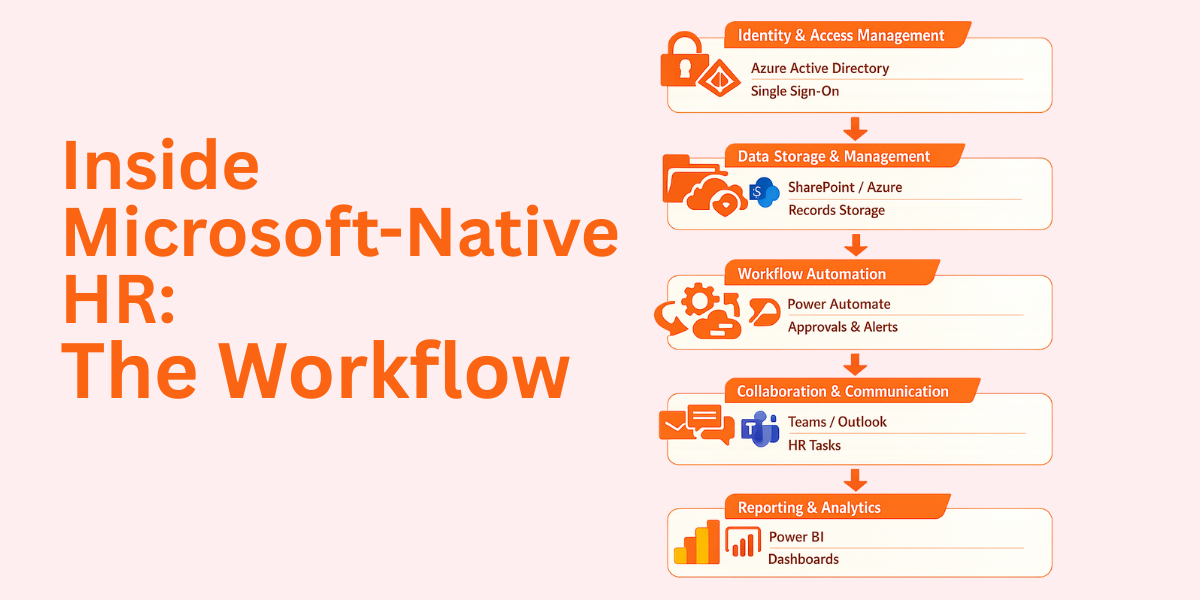
Identity And Access Management
The authentication of the users is done by the Azure Active Directory. This facilitates single sign-on, access based on roles, and uniform security policies across systems.
Data Storage And Management
SharePoint or Azure-backed services are used to store employee records and documents. The permissions are defaulted to the security framework of Microsoft.
Workflow Automation
Power Automate is used to address approvals, reminders, and notifications. The HR processes are improved in speed and reliability.
Collaboration And Communication
The HR work is directly visible in the Microsoft Teams, Outlook, or SharePoint portal. Managers perform without even leaving their working area.
Reporting And Analytics
Power BI also links with HR data and provides live dashboards. HR executives get an insight without manual exports.
Core Components And Microsoft Integrations
Microsoft-native HR software usually consists of the following elements:
These components are compatible with each other and lower the risk of integration and accelerate deployment.
Types Of Microsoft-Native HR Software
There are several categories of Microsoft-native HR software.
Core HR And Employee Data Management
Such systems are centralized by keeping employee profiles, contracts, organizational charts and compensation. They substitute spreadsheets and distributed file systems.
Talent Management Solutions
The type comprises recruitment, onboarding, performance management, and succession planning. The ability to work with Teams and Outlook on a deeper level enhances teamwork.
Time And Attendance Systems
These applications monitor working hours, absences, and leave with Microsofts calendars and workflows.
Learning And Development Platforms
Learning systems are compatible with Microsoft and third party provider. Training is available to employees with Microsoft 365.
HR Analytics And Reporting Tools
These solutions, based on Power BI, have workforce planning, compliance, and executive reporting dashboards.
| Feature | Microsoft-Native HR Software | Non-Native HR Software |
|---|---|---|
| User Experience | Embedded in Microsoft 365 | Separate interface |
| Authentication | Azure AD | Custom credentials |
| Data Location | Microsoft cloud | External vendor cloud |
| Security Model | Microsoft-based | Vendor-specific |
| Adoption Speed | Faster | Slower |
| IT Overhead | Lower | Higher |
Helpful Resource: Microsoft Ecosystem HR Solutions
Microsoft-Native Vs Non-Native HR Software
These differences can be seen clearly when compared to each other.
| Feature | ✅ Microsoft-Nativee.g. Lanteria HR | ⚠️ Non-NativeExternal vendors |
|---|---|---|
| User Experience | Embedded in Microsoft 365 | Separate interface |
| Authentication | Azure AD | Custom credentials |
| Data Location | Microsoft cloud | External vendor cloud |
| Security Model | Microsoft-based | Vendor-specific |
| Adoption Speed | Faster | Slower |
| IT Overhead | Lower | Higher |
Native solutions tend to be cheaper and simpler in Microsoft- first organizations.
Practical Examples Of Microsoft-Native HR Software In Action
Employee Onboarding
A new hire joins. Azure AD creates the account. The employee profile is created by SharePoint. Onboarding tasks are allocated in Power Automate. Microsoft Teams informs managers automatically.
Performance Reviews
Reviews are done by managers through a SharePoint portal. Employees are reminded to use Outlook. Power BI dashboards monitor progress made by HR.
Leave And Absence Management
Workers make leave claims in Teams. Approval involves automated processes. The Outlook calendars are real-time.
Helpful Resource: HR Software Solutions: Streamlining HR Processes with Lanteria HR
Key Benefits For HR And IT Teams
Microsoft-native HR software provides value within departments.
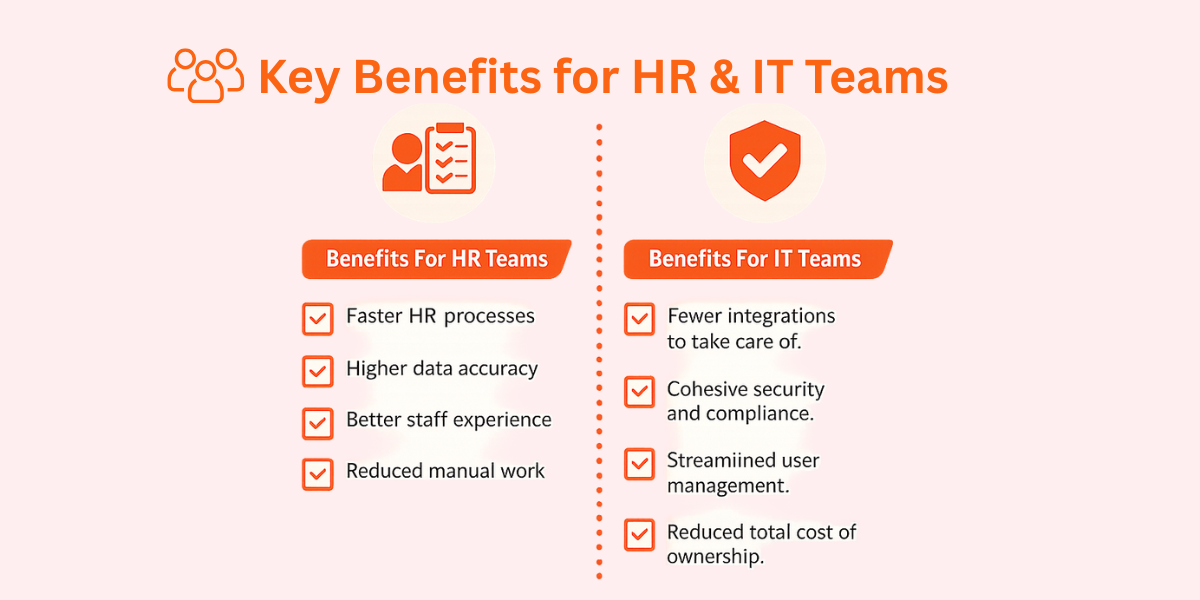
Benefits For HR Teams
- Faster HR processes
- Higher data accuracy
- Better staff experience
- Reduced manual work
Benefits For IT Teams
- Fewer integrations to take care of.
- Cohesive security and compliance.
- Streamlined user management.
- Reduced total cost of ownership.
TL;DR
Microsoft's native HR software runs within the Microsoft ecosystem. It is based on Microsoft 365, SharePoint, Teams, Azure AD, Power BI, and Power Automate. The methodology enhances adoption, greater security, and easier HR processes by Microsoft-focused organizations.
Conclusion
Microsoft's native HR software is not only a technical preference. It's a strategic decision. Organizations streamline HR operations, enhance efficiency, and improve data management through the alignment of HR processes with Microsoft tools.
This method removes unwanted complexity for companies already invested in Microsoft 365. HR teams work faster. Systems are easier to adopt by the employees.
When you want to modernize HR without interfering with the way people work, then Microsoft-native HR software provides a viable direction.
FAQs
Is Microsoft-Native HR Software Only For Large Enterprises?
No. Mid-sized organizations can also use it, particularly those that are already using Microsoft 365.
Does Microsoft-Native HR Software Replace Dynamics 365?
Not necessarily. Certain platforms are complementary to Dynamics, and others specialize in HRMS features.
Is Data More Secure In Microsoft-Native HR Software?
Yes. Data is in compliance with Microsoft identity, security, and compliance standards.
Can Microsoft-Native HR Software Run On-Premises And In The Cloud?
Both deployment models are supported by many solutions based on the requirements of organizations.
How Long Does Implementation Usually Take?
It has fewer integrations and is usually quicker to implement, thus faster than non-native systems.
Assuming your team lives on Microsoft 365, your HR software should as well. Book a demo and make your workflow easier, and begin to work smarter.


