
Imagine the following situation. Your best software architect quits on a major product launch. You open your HR dashboard, and the only thing you can see is the previous turnover reports. You are responding rather than planning.
This is the trap of the lagging indicators. It makes you react when it is too late. How would you feel to be able to spot the warning signs before you start getting disrupted?
Predictive hr analytics transforms HR in a dynamically different way. It relies on past facts on workforce in order to predict the future.
This blog demonstrates how predictive models transform instinct into strategy. It addresses fundamental types of models and technical processes. It also describes the way Microsoft-based HRMS systems, such as Lanteria, help to plan the workforce in a smarter way.
What Is Predictive Analytics In HR?
Advanced analytics is a specialized form of predictive analytics. It applies machine learning, statistics and data mining. These techniques predict the business future.
Structured algorithms feed on past employee data in HR. Such systems find correlations and patterns of behavior. The outcome is an understanding of the future risks and opportunities of workforce.
It is no longer your evaluation of resignations of last year. Before exits happen, you are determining indicators of flight risk. The promotion gaps or commute time are such variables that can be measured.
Why Your HR Tech Stack Needs Predictive Power
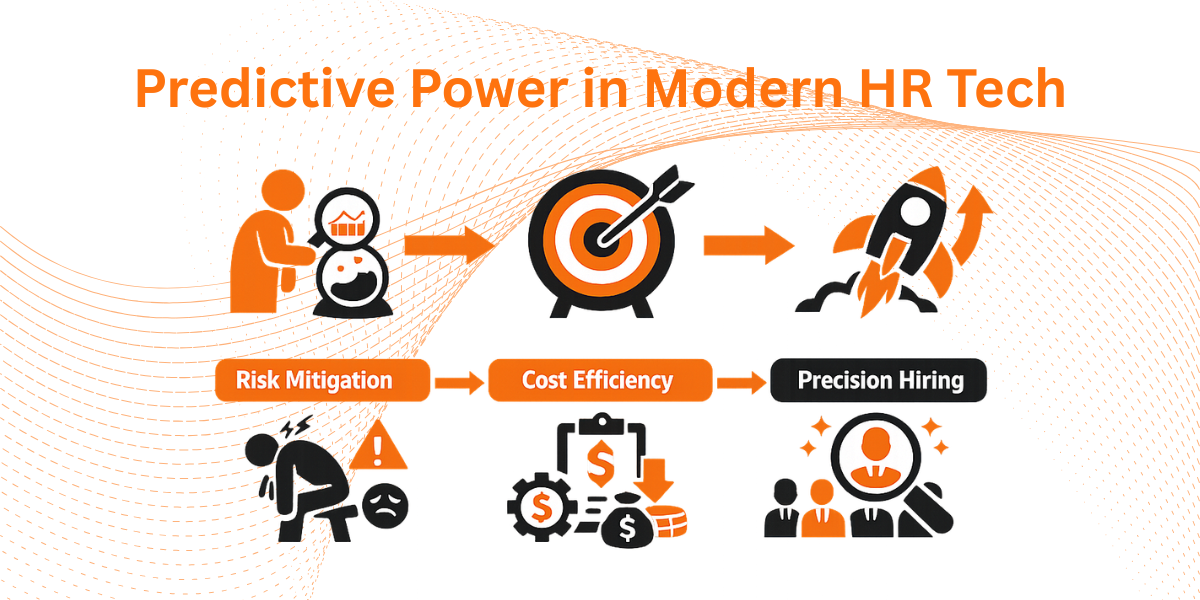
Traditional reporting describes what occurred in the past. It does not include timing and probability. Predictive analytics bridges that strategy gap.
It enables leaders to intervene at the initial stage. It facilitates effective forward looking planning of workforce. It secures productivity before it starts to fall.
- Risk Mitigation: Identify burnout and disengagement in time to avoid loss of productivity.
- Cost Efficiency: Minimize turnover expenses by employing precision-focused retention plans.
- Precision Hiring: Find sources of recruitment that provide long-term high performers.
Helpful Resource: What is HR Tech?
Types Of Predictive Models In HR
All predictive models are not meant to do the same thing. The various objectives need different modeling techniques. The majority of HR analytics projects may be divided into three categories.
Churn models avoid losing employees by identifying signs of early resignation. Predictive models such as promotions or relocations are forecasted using propensity models. Clusters are used to group employees and discover patterns of talents and inform planning.
How Predictive Analytics Works: The Technical Flow
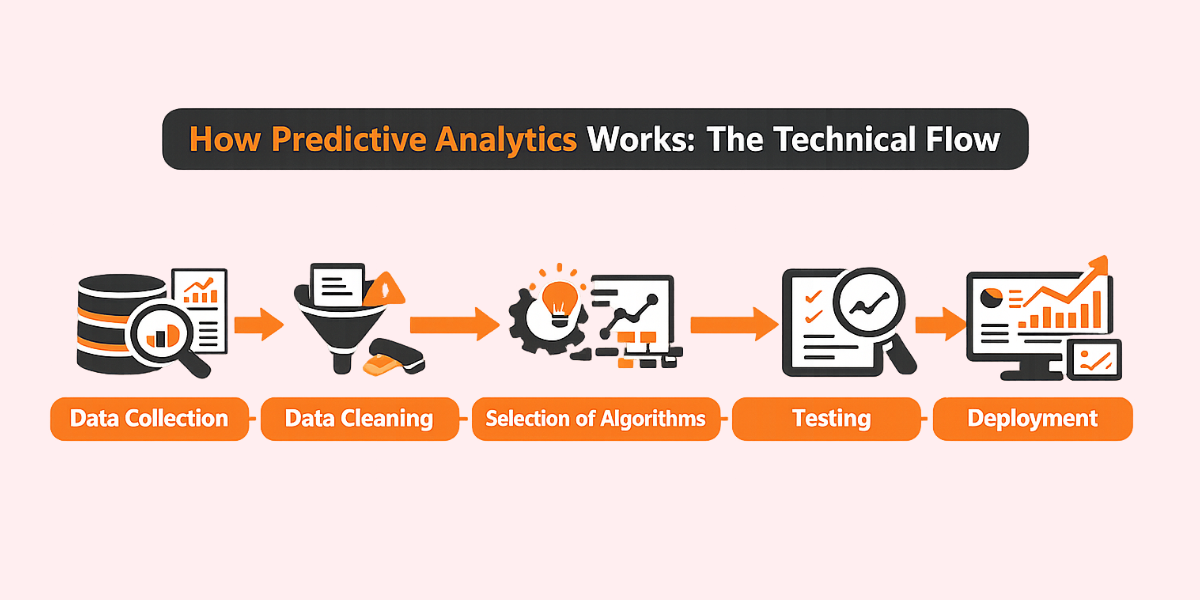
Forecasting is a disciplined process. It is not guesswork. It relies on clean and orderly systems.
Data Collection
Summarize HRMS, learning and performance review records. Add engagement surveys, payroll history. The centralization of data enhances reliability of the model.
Data Cleaning
In data cleaning, remove duplicates and outdated records. Standardize forms and job titles. Predictions are credible when there are accurate inputs.
Selection of Algorithms
Select models according to purpose. Regression analysis and random forest can be used as an option. Both have predictive objectives.
Testing
Compare the results with past results. Determine measure accuracy and recall. Clean off parameters that do not make sense.
Deployment
Combine findings into Power BI dashboards. Show predictive values and operational indicators. Provide managers with the ability to track risk indicators in real time.
Helpful Resource: Future-Proof Your HR with Secure Lanteria Solutions
Integration With Microsoft Ecosystems
Lanteria gives organizations a structural advantage. It is a platform based on SharePoint and Azure. This brings about a smooth connectivity.
Azure machine learning is used to process the workforce data effectively. Outputs of Power BI are converted into executive dashboards. The insights can be put into action.
Active Directory and ADP records can be synchronized. The succession preparedness and turnover projections are updated automatically. Managers observe the real time reliable data.
Helpful Resources: A Comprehensive Guide to Microsoft-Integrated HR Platforms
Key Terms To Know
- Algorithm: This is a systematic code of mathematical rules, which detects patterns within workforce data and drives predictions.
- Data Silo: Data kept in isolation that cannot be seen across systems and do not predict well.
- Machine Learning (ML): A subdivision of AI that allows systems to make predictions more and more accurate without the need to be updated manually.
- Prescriptive Analytics: This is a complex model that suggests a course of action upon predictive data.
Best Practices For Data-Driven HR
- Focus on Data Quality: Clean data produces accurate predictions. Maintain employee records in accurate and central location.
- Address Bias: Audit models are routinely addressed. Keep track of demographic impact.
- Start Small: Start with a single high-impact metric. Scale when results have been proved.
- Ensure Privacy: Have role based access controls. Store valuable information about the workforce.
TL;DR
- Turns HR into a proactive planning instead of a reactive reporting.
- Predicts turnover, recruiting effectiveness, leadership shortages.
- Microsoft 365 HRMS is integrated to provide real-time Power BI information.
- Use of clean data to enhance prediction.
- Needs moral control to be fair and trustworthy.
Conclusion
The volatility of workforce is increasing in industries. The issue of talent gaps is coming at a pace that is exceeding the expectation of most teams. Reactive management just adds to the disruption of operations.
Predictive analytics offer formal insight. It brings into focus the warning signs before turnover occurs. It enhances the process of succession planning and hiring confidence.
Planned organizations are better than lagging ones. A combination of HRMS systems, Azure modeling, and Power BI creates a proactive talent engine. Foresight has become a competitive advantage, and therefore it must be built out before it is disrupted.
FAQs
Is Predictive Analytics Only For Large Enterprises?
No. Mid-sized organizations can be of great benefit. Even smaller data sets will indicate actionable patterns.
How Accurate Are These Predictions?
Precision requires data quality and format. Very high reliability is often reported in integrated HRMS platforms. On-going perfection enhances further results.
Does This Replace Human HR Managers?
No. Analytics makes decisions but it does not overturn judgments. Human empathy is still a necessity.
What Tools Do I Need To Start?
A centralized HRMS such as Lanteria is required. You also require the Power BI and the past employee information. It is important to be integrated in a structured manner.
Are you ready to stop reacting and start predicting? Request a Demo with Lanteria.


