
Glossary: People Analytics - Turning Employee Data Into Actionable Insights
Consider a manager observing a high performer of a team resign. You never saw it coming, and plans are blindsided by turnover. Or productivity reduces with new hires; that is not a gut-feel problem: it is a data problem.
Guessing is no longer feasible in the current workplace. You must measure the human aspect of performance, engagement, and retention. That is the case with People Analytics,s which links employee data to business strategies.
In this blog, the author defines People Analytics (PA) and explains why it should be important. It is divided into implementation steps and the types of analytics you may apply. Lastly, it demonstrates how unified HR systems make data easier to access, so now we can explore the data.
Definition: What Is People Analytics?
HR analytics, or people analytics, involves using data to enhance people decisions. It gathers and compiles HR data on the workforce to address business issues. It is equivalent to performing data science for your Human Resources team.
Leaders do not make decisions based on intuition. It deals with hiring efficiency, engagement, and employee turnover throughout the lifecycle. It describes how individuals drive overall company success, transforming data into a clear personnel narrative.
Helpful Resource: What are People Analytics?
Why Is People Analytics Essential Today?
Give concern to spreadsheets as they are result-oriented. Talent insight is a superpower in a competitive market. It will help you keep the best and recruit smarter.
Data-driven companies are more likely to be profitable. They can forecast attrition early and identify training that enhances sales. You are just flying an aircraft without a dashboard.
Helpful Resource: Transform HR with Lanteria Analytics Suite
How To Implement People Analytics
The implementation path is specific and closely resembles a technical reverse-engineering task. The first point is to define a business problem that you wish to address. An example is minimizing turnover or enhancing diversity.
Then, collect the required data from your HRIS or SharePoint. Be clear so as to be accurate and consistent. Then, use analytical models to determine patterns.
In the end, use visual dashboards to communicate with stakeholders. Ask the question and update the changes as you track the results. This will help you to improve over time.
Helpful Resource: What Is an HRIS (Human Resource Information System)
Categories Of People Analytics
Not every analytics is made equal. There are various levels of data you will use, depending on your objectives. The majority of organizations begin with simple reporting and proceed to complex forecasting.
| Analytics Type | Question Answered | Complexity | Value |
|---|---|---|---|
| Descriptive | What happened in the past? | Low | Foundational |
| Diagnostic | Why did it happen? | Medium | Insightful |
| Predictive | What is likely to happen next? | High | Strategic |
| Prescriptive | What should we do about it? | Very High | Transformational |
Key Benefits Of A Data-Driven HR Strategy
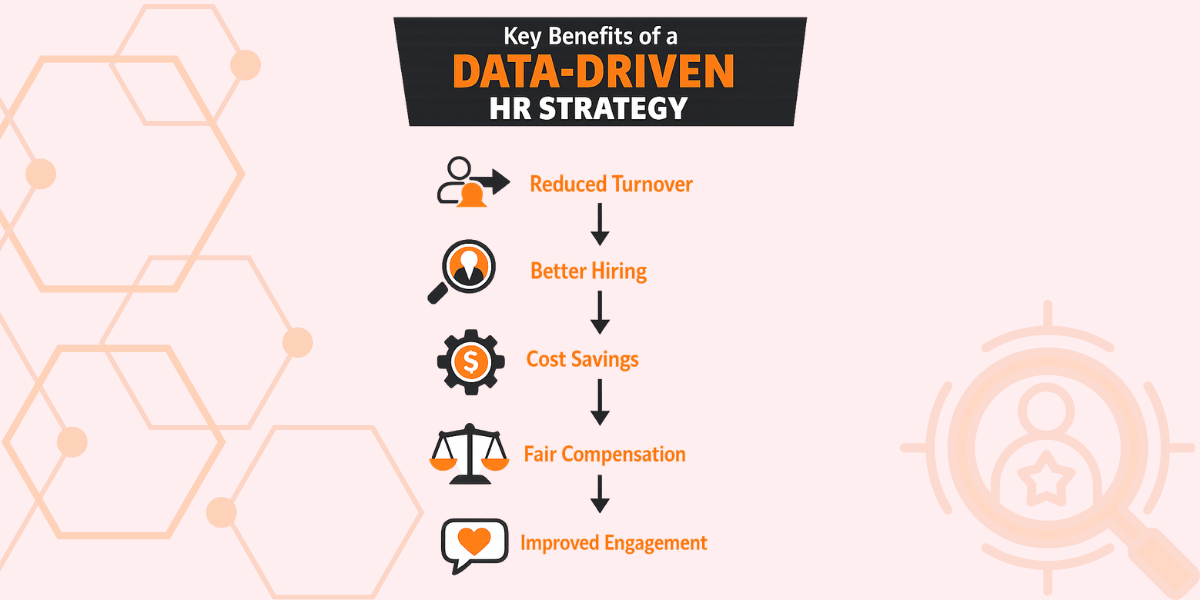
- Reduced Turnover: This helps determine flight risk through engagement analysis and tenure.
- Better Hiring: Collect information from sources that help you to bring the best employees.
- Cost Savings: Automating reporting will save hundreds of hours per month.
- Fairer Compensation: Use the data to guarantee overall pay equity in your organization.
- Improved Engagement: Learn what truly drives your teams using feedback loops.
Integration With Microsoft Office 365
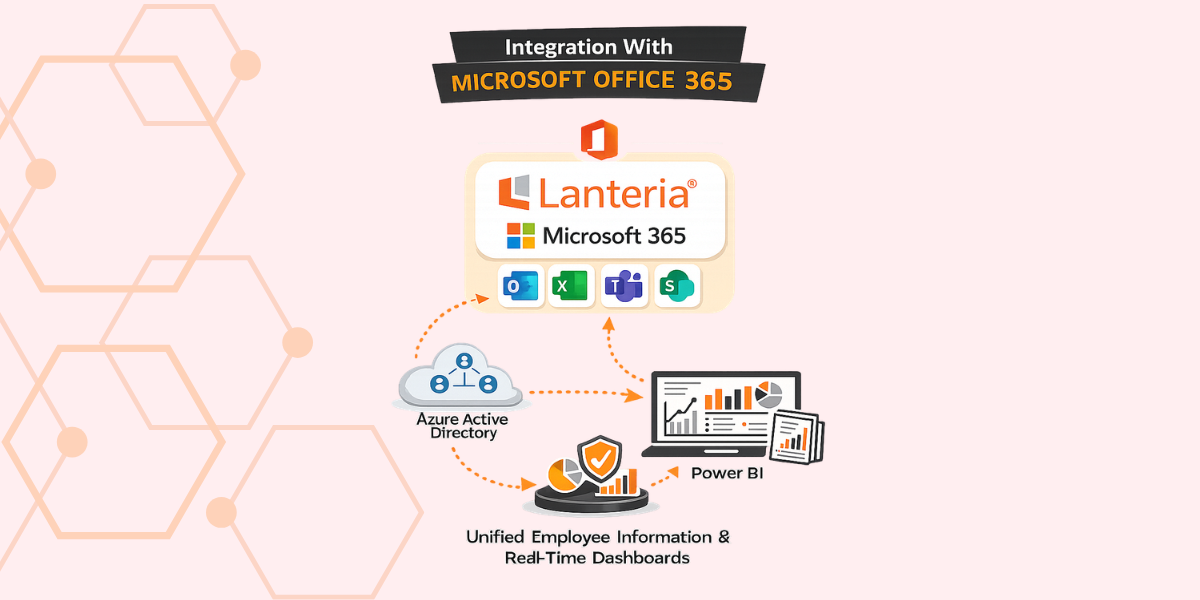
In most cases, data location is the greatest challenge for many teams. It is not possible to analyze data confined in silos. That is why it is essential to be integrated into your already existing tech stack.
A system like Lanteria in Microsoft 365 is a game-changer. It allows you to extract data from Azure Active Directory. Then you are free to push insights to Power BI to real-time dashboards.
This leads to the development of a single source of employee information. It retains analytics safe and conversant. And it makes reporting such a powerful tool.
Important Terms In People Analytics
- Employee Lifetime Value (ELV): The cumulative value presented by an employee to an organization.
- Churn Rate: The rate of employee turnover over a given time.
- Heat Maps: Visual maps that are used to indicate high and low activity areas, such as departmental turnover.
- Data Cleaning: The process of removing errors or anomalies from your HR data.
- Attrition: The slight decrease in the workforce due to resignations and retirements.
TL;DR
- Gets smarter business decisions out of workforce data.
- Transforms HR into an evidence-based approach.
- To improve hiring and reduce turnover, use descriptive, predictive, and prescriptive models.
- Integrates with Office 365 and Power BI to provide reliable, shareable information.
Conclusion
People Analytics is no longer the reserve of tech giants with big data teams. Any organization, regardless of its size, that is seeking to remain competitive and support staff has now made it essential. Passing through the data maturity, HR transforms from a cost partner to a strategic partner.
It begins with accurate data and proper infrastructure. Making your HRMS work with the Microsoft ecosystem eliminates technical friction. It is then possible for leaders to make human-centric, data-driven decisions.
Begin with one definite business problem. Establish fast-wins and enhance trust in the data. Gather knowledge, act, and measure potential effects.
FAQs
What Is The Difference Between HR Analytics And People Analytics?
Most of the time, they are taken to have the same meaning. People Analytics is wider, though. It not only addresses HR procedures, but also the whole human aspect of labor, such as productivity and cooperation.
Do I Need A Data Scientist To Start?
Not necessarily. Recent HRIS systems, such as Lanteri, have preconfigured reports. These enable the HR teams to gain knowledge without having to be highly qualified in statistics.
Is Employee Data Privacy Protected?
Yes. It is possible by using the right tools. Enterprise-grade security is used in systems that are integrated with Microsoft 365. This ensures sensitive employee data can be viewed only by authorized personnel.
How Does It Help With Remote Work?
The level of digital collaboration and engagement can be monitored using analytics. This helps managers empower remote working groups who may otherwise feel out of place or overwhelmed.
Instead of guessing, make real decisions about people with Lanteria.
Request a demo now and learn how Lanteria integrates with your daily Microsoft applications.


