

HR Management
5 min read
Microsoft-Integrated HR Platforms: Benefits & How It Works
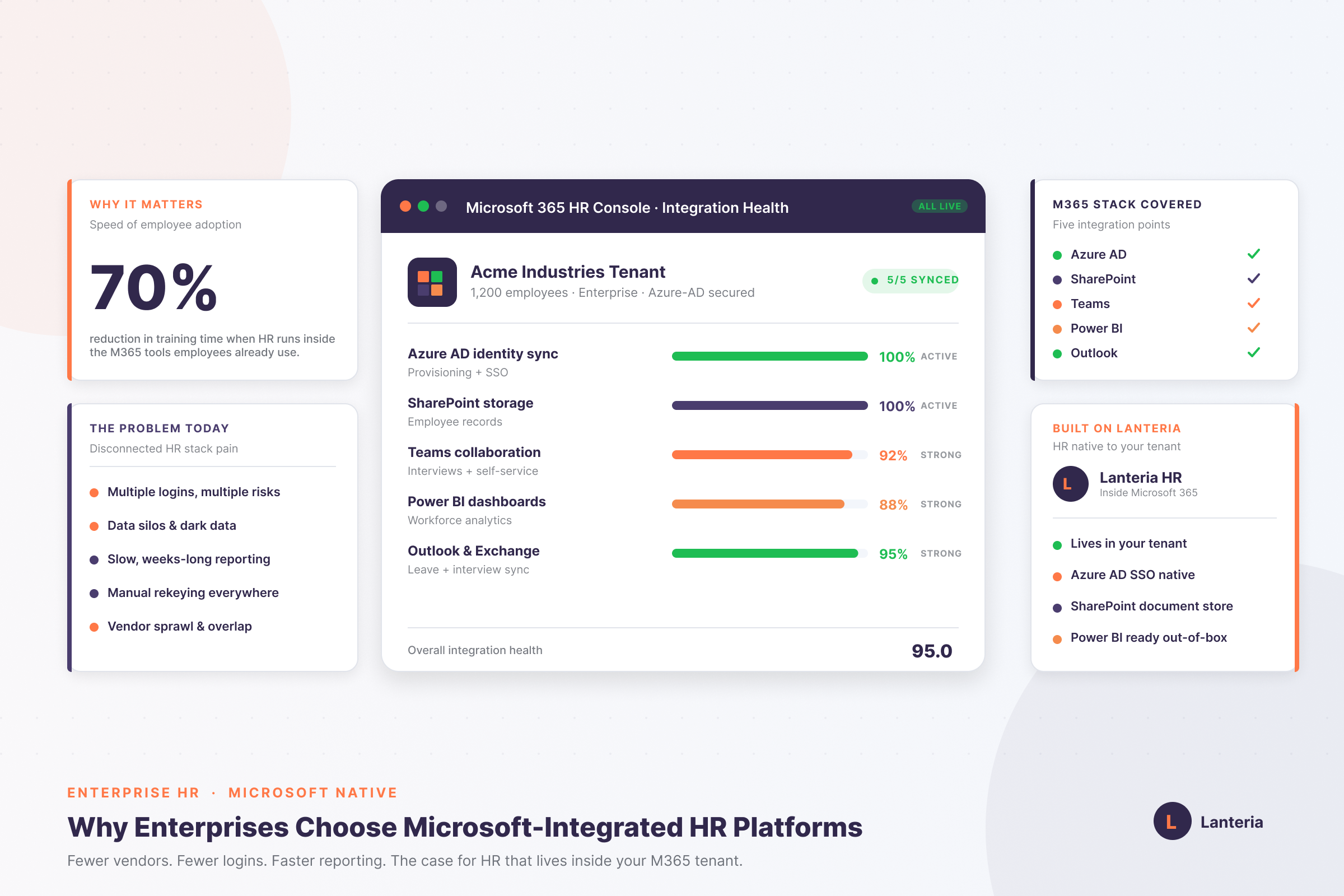
Microsoft-integrated HR platforms run inside your own tenant. See how SharePoint, Azure AD, Teams and Power BI cut risk, lift adoption and speed reporting.
Read more



Imagine it is Monday morning. You just open Microsoft Teams to reply to messages, and your HR tools are just next to your project channels. No additional logins, no tab-switching, and no time spent refreshing the information.
The absence of tools is not the actual issue for many HR leaders. It contains too many tools that do not complement each other. One system handles payroll, a second handles hiring, and a spreadsheet handles performance reviews.
This blog is the reason why 2026 is the year of native integration. We consider what the term "Microsoft-native" means and its significance. We also demonstrate how microsoft native HR software can make HR's everyday work easier and more strategic.
What Is Microsoft-Native HR Software?
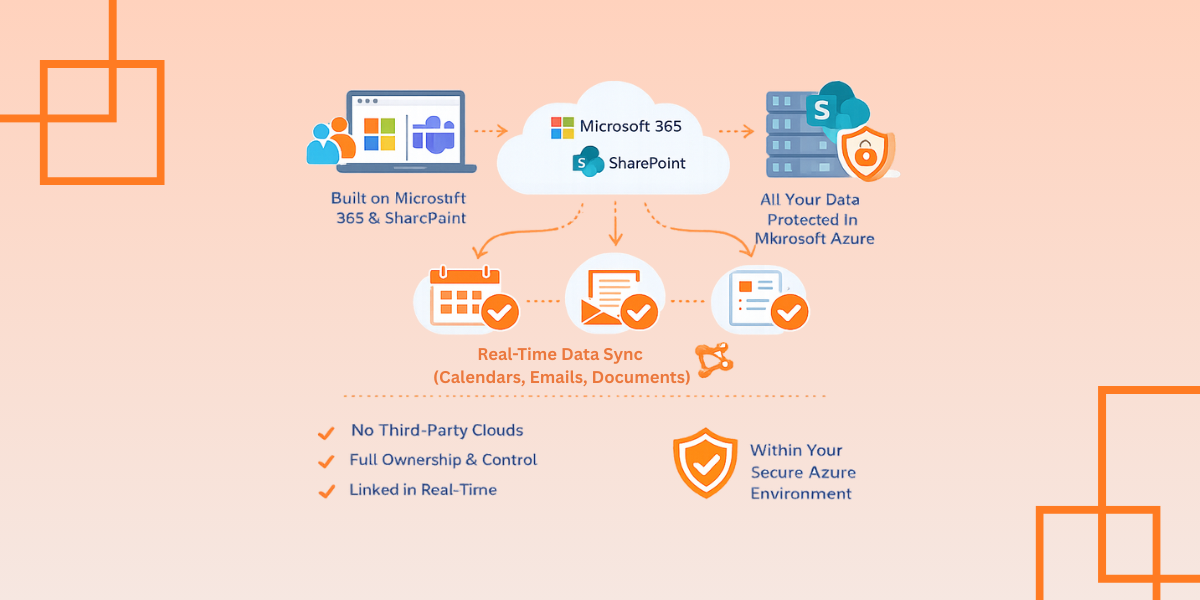
When a solution such as Lanteria SharePoint HR is presented as Microsoft-native, it implies more than just single sign-on. The system is developed based on Microsoft 365 and SharePoint. All the employee data remains within your Azure.
The data is not stored in an unknown third-party cloud. It is situated in the area where the organisation already operates and keeps files. That puts the ownership and control in your hands.
This is important in 2026 more than ever. Artificial intelligence tools are no longer mere data analysers. Native software links the calendars, emails, and documents in real time.
These systems synchronize everything using the Microsoft Graph API. As soon as a new employee is added to Active Directory, they appear in the org chart. Nothing has to be copied or pushed by hand.
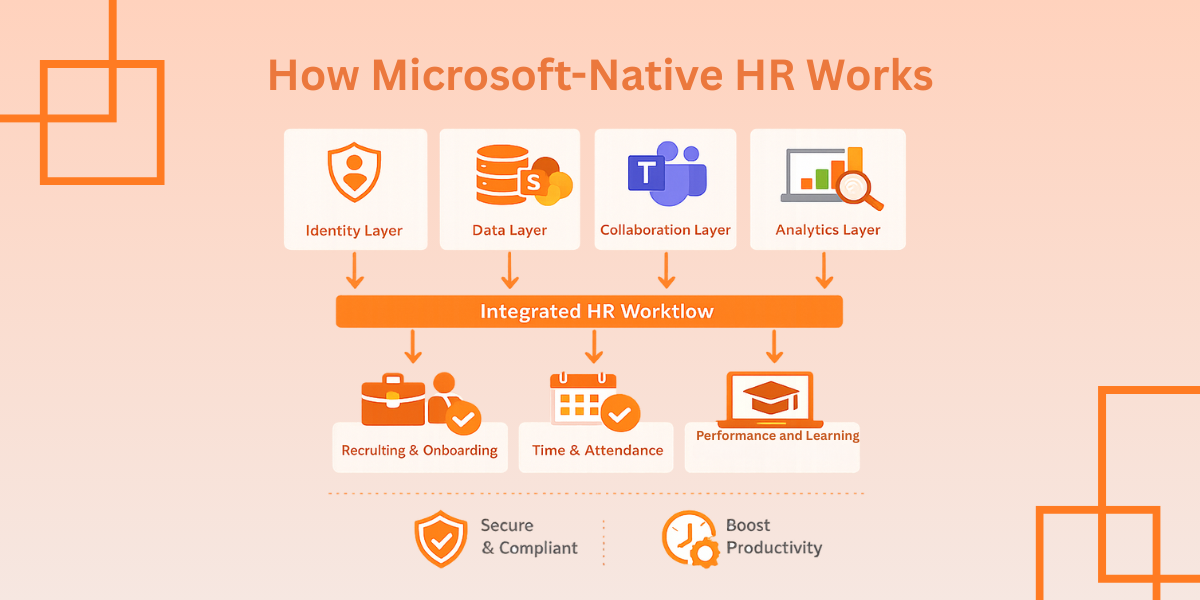
To see how this is accomplished, it is beneficial to take a look at each layer. An integrated HR system is one that links several core areas. Each layer plays a clear role.
Helpful Resource: Microsoft Ecosystem HR Solutions
HR tools have taken a turn. Business is no longer going to a single system. Instead, they are opting to pick related suites.
The reason is simple. Data silos are costly in both time and money. Each manual transfer is a risk and a source of confusion.
Lack of system communication introduces errors. Security loopholes are created as information flows in and out of the tools involved. The native systems eliminate that threat by centralizing everything.
| Feature | Standalone HR Software | Microsoft-Native (Lanteria) |
|---|---|---|
| Data Security | Third-party cloud storage | Your own Microsoft Azure/SharePoint |
| User Adoption | High (New interface to learn) | Low (Familiar Office 365 UI) |
| IT Overhead | High (Managing extra APIs) | Low (Uses existing M365 permissions) |
| AI Readiness | Limited to vendor AI | Works with Microsoft Copilot |
| Reporting | Static PDFs or in-app charts | Live Power BI dashboards |
Microsoft's security investment is advantageous to a native system. You do not need an independent vendor to remain safe. Your HR data is no exception to the rules of your whole Microsoft environment.
If your IT department is safeguarding Office 365, your HR data is also safeguarded. No additional security system is required. Everything is done in accordance with the current policies.
This reduces risk and stress. IT teams handle fewer systems. HR departments operate without fear of data leakage.
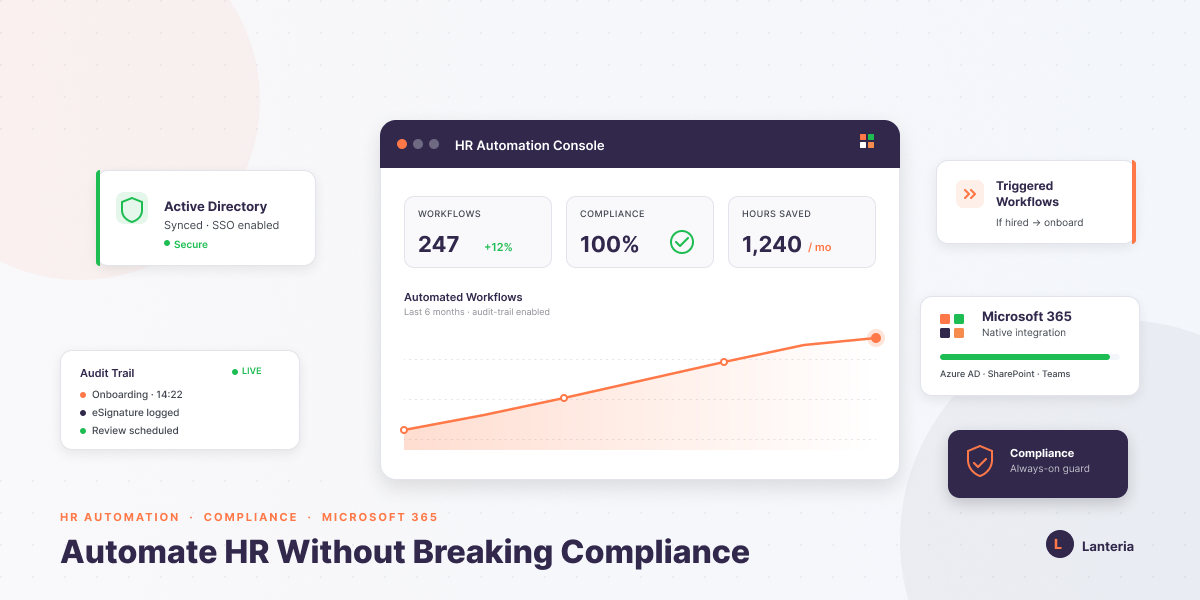
How does it feel on a regular working day, then? Automation is the greatest change. Jobs that took weeks to complete now require seconds.
All employee data remains in SharePoint. This enhances workforce planning by up to 90 percent. When making decisions, it is not based on guesses but on live data.
The system, such as Lanteri, facilitates the entire employee path. It has no single function. All this is connected on a single platform.
The following modules are the most important modules you are likely to have in a modern HRMS:
When you are dealing with more than 50 workers, the indications are evident. Data re-entry in spreadsheets is time-consuming. Errors become routine.
Microsoft-native systems are even more reasonable if you are using Office 365. Its infrastructure is already in place. It is not that you are not using it to its full potential.
As of 2026, unlinked data slows companies down. It is no longer inconvenient. With integrated teams, more than 75% of manual work is reported in onboarding and offboarding.
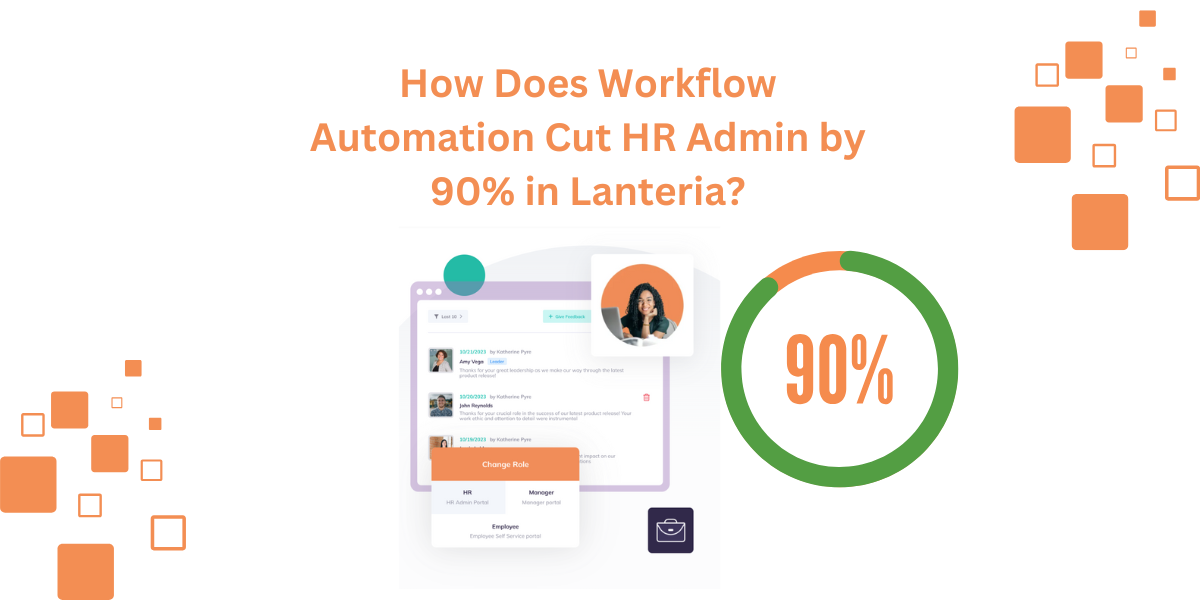
Helpful Resource: Cut HR Admin by 90% with Lanteria Workflow Automation
The next generation of HR is not glitter and glamour. It is concerning the tools that collaborate. The connected systems liberate the teams from busywork.
An option such as Lanteria, a Microsoft-native solution, alters HR operations. You are no longer dealing with paperwork; you are dealing with shaping strategy. Your team will save time, understanding, and concentration.
Yes. Your data stays inside your own SharePoint and Azure setup. You own it and control it fully. It follows the same security rules you already use in Microsoft 365.
Yes. You can manage HR tasks right inside Teams. That includes interviews, leave approvals, and goals. There is no need to jump between apps.
Yes. Native systems are built to connect with other tools. Lanteria works with ADP, LinkedIn, DocuSign, and more. Your data stays in sync without manual work.





%20Priority%20of%202025.png)