

HR Management
5 min read
Microsoft-Integrated HR Platforms: Benefits & How It Works
Microsoft-integrated HR platforms run inside your own tenant. See how SharePoint, Azure AD, Teams and Power BI cut risk, lift adoption and speed reporting.
Read more


Suppose that you are an HR manager of a rapidly expanding company. Your mailbox is clogged with unread resumes, and leadership wants a turnover report by the end of the day. You are cross-exchanging spreadsheets and attempting to keep track of training status.
This is the actual day-to-day reality of the HR work. It is the lack of time and abundance of data. The pressure is mostly generated by manual work, which slows everything down.
This blog is beyond the AI buzz and hype. It is devoted to AI solutions for real HR issues within Microsoft 365. You will be surprised to learn how AI eliminates friction and makes HR's daily work easier.
We have the basics, including predictive insights for automated onboarding using an AI HR Software. We define AI, explain its importance, and discuss its role in the current HR system. This is aimed at enabling you to streamline your HR tech stack.
Through AI in HR analytics, people are not substituted. It is the intelligence overlay of the existing systems. This has Machine Learning and Natural Language Processing.
These are tools that operate within your HRMS. They read the information that is already stored in Microsoft 365 and SharePoint. The system begins to comprehend information rather than merely hold it.
A human resource management system (Lanteria) is an artificial intelligence that identifies attendance patterns. It automatically reads and organizes resumes. It also processes employee feedback.
This makes the HR software a collaborator. It is a system that proposes actions rather than waiting for input. HR teams stop pursuing data and act on it.
Helpful Resource: What is HRMS Software?
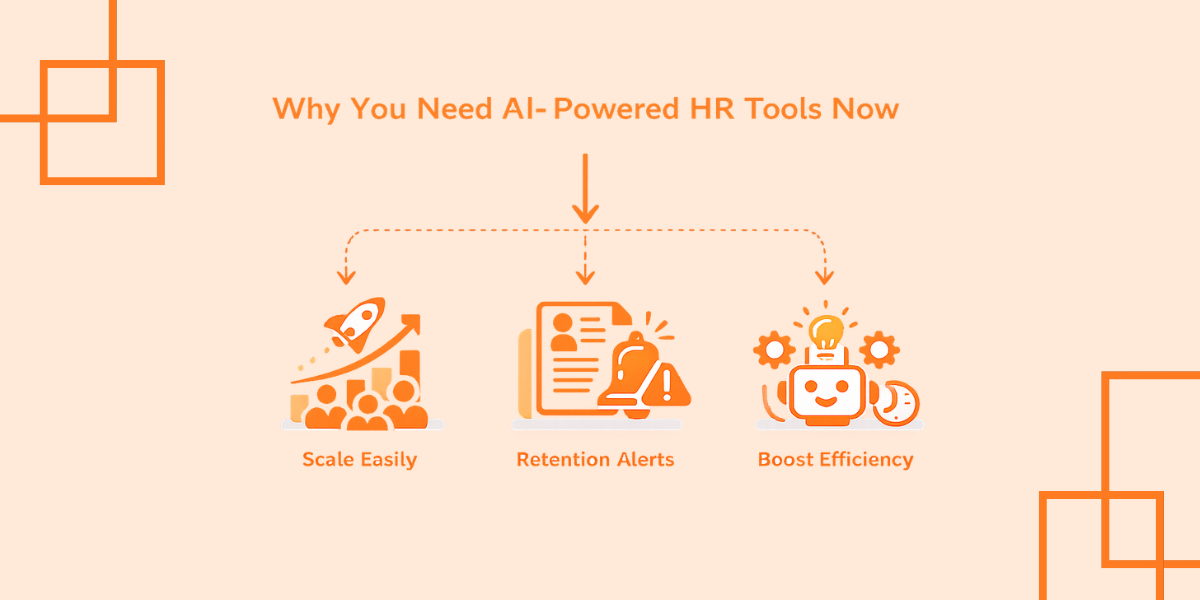
The reason is scale and speed. HR processes cannot expand easily when teams use manuals. An increased number of people implies increased errors and delays.
AI deals with expansion without straining. It discovers the signs of dissatisfaction at an early age. This will help curb unforeseen resignations.
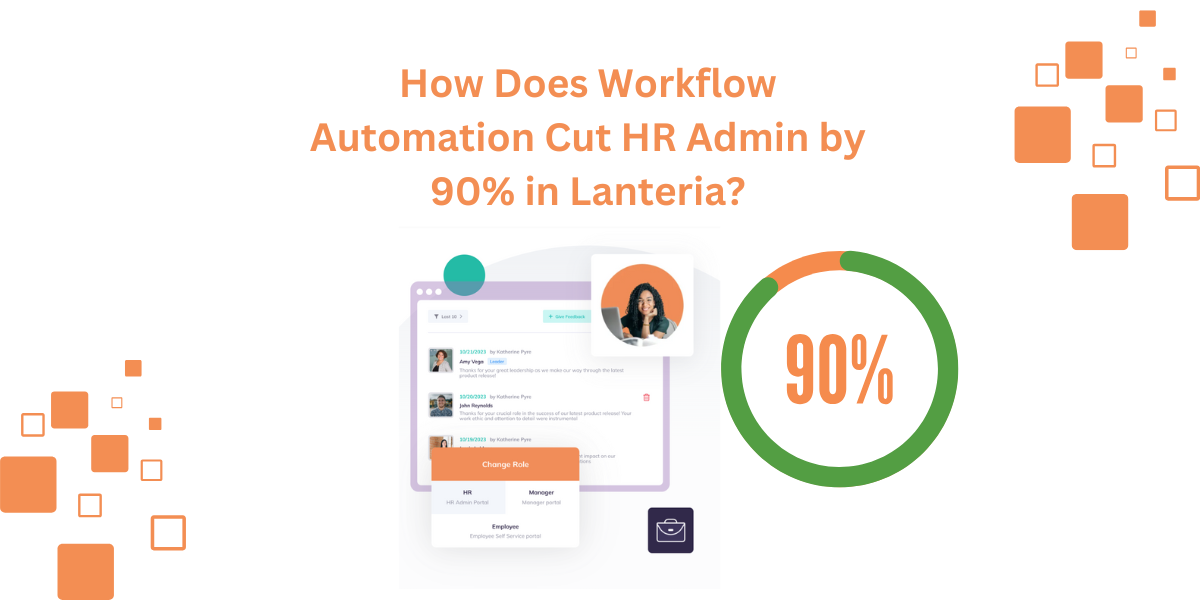
HR teams save time by automating repetitive functions. Strategy and culture can be worked on at that time. AI enables better decisions across the business.
| Feature Category | Primary Benefit | Real-World Impact |
|---|---|---|
| Recruitment | Faster Screening | Minimizes the number of weeks to hire |
| Onboarding | Automation | Reduces employee participation by 75% |
| Performance | Objectivity | Removes 90% of errors in calculation |
| Learning | Personalization | Tailors training to individual skill gaps |
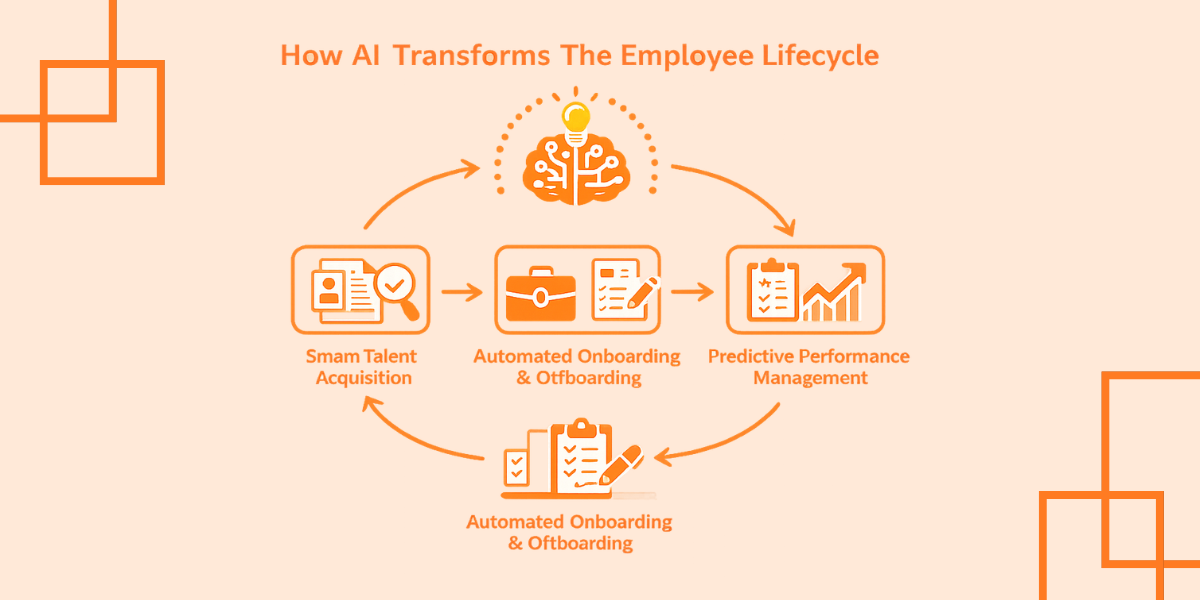
AI manifests itself in the employee lifecycle. The stages become quicker and more regular. The greatest impact is the saving of time.
We will examine this in practice. The following instances demonstrate the areas of AI that minimize effort. They also demonstrate where accuracy improves.
The Applicant Tracking Systems powered by AI are not only doing keyword matching. They are used to assess skills aligned with the role's requirements. This enhances both fit and retention.
This eliminates pressure in screening early. The recruiters dwell on purposeful conversations. Decisions in hiring are more uniform.
AI assists with ensuring none of the onboarding procedures are missed. It also delegates training and reminds automatically. Documents are monitored using eSignatures.
All new employees receive an equal experience. The process is not location-dependent. The compliance process begins on day one.
The offboarding process also becomes easier. Automatic access is controlled. The transfer of knowledge can be more easily followed.
Helpful Resource: What is Employee Onboarding?
Conventional reviews are based on opinion and memory. AI uses live data instead. It is a tool that examines activity on Microsoft tools.
This leads to fairer reviews. Managers see issues earlier. Teams are not perceived as observed.
The AI features do not all perform the same task. They are grouped in most of the enterprise HR systems. This assists teams in making a choice of what is required.
Every type is a solution to another problem. They both overlap with daily HR work. This forms a harmonious system.
The time is now, when your team wastes hours of its time on manual tasks. Burnout and turnover are common when waiting. Contemporary tools minimize the installation work.
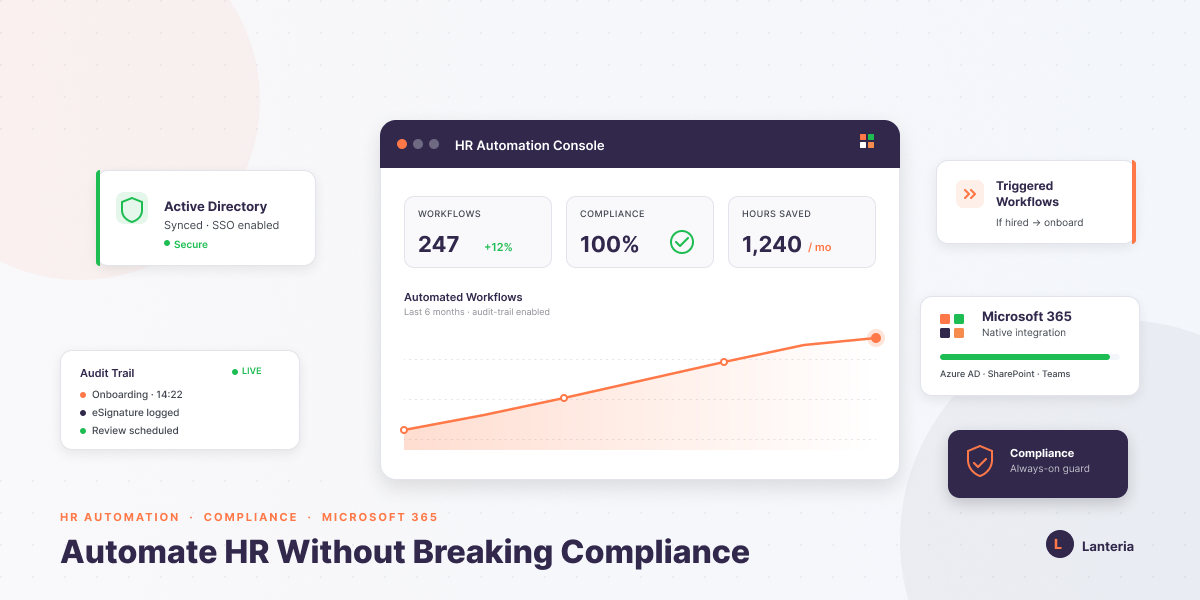
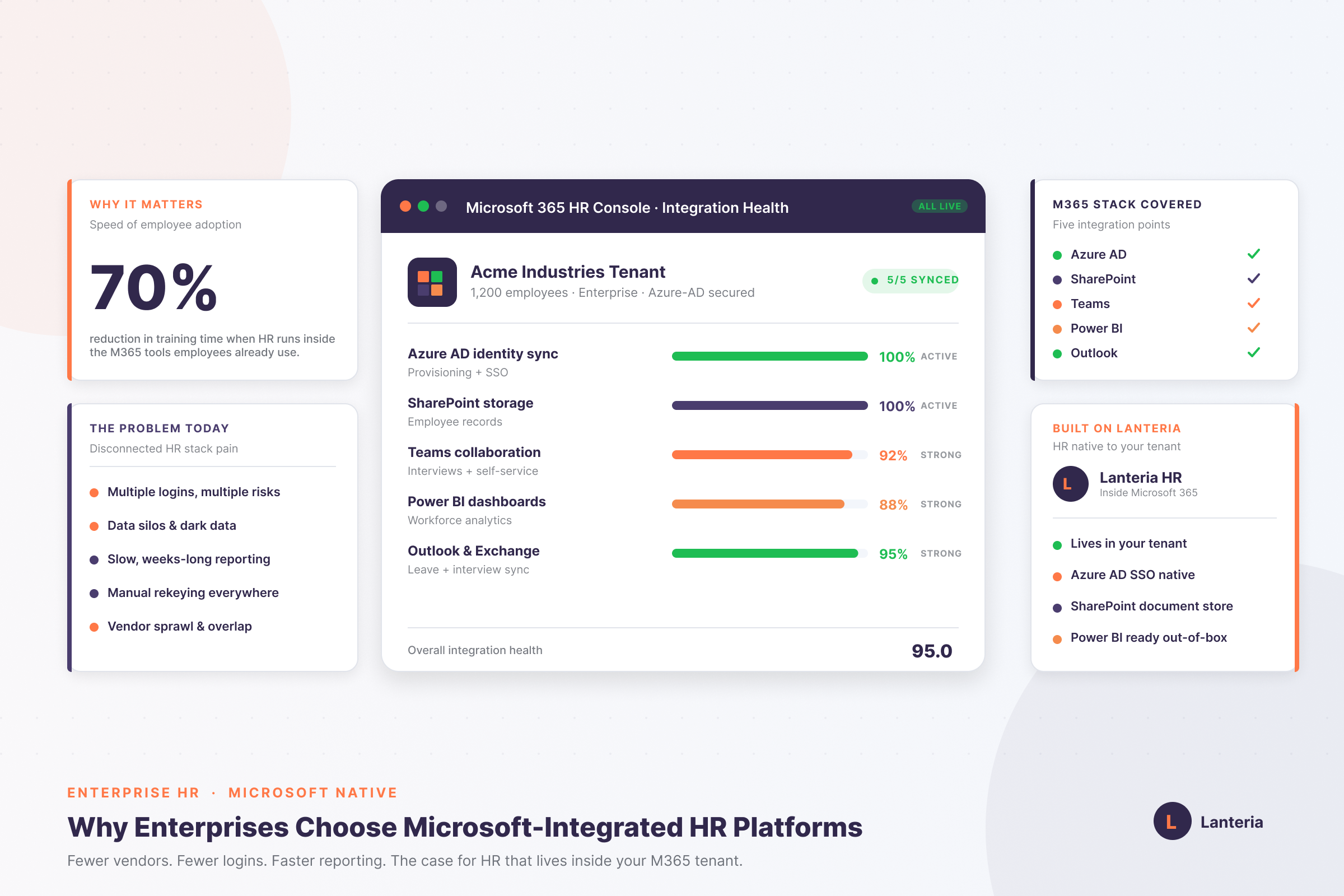
Azure Active Directory allows HR databases to synchronize fast. Power BI can be used to develop dashboards. The majority of the data is already accessible.
Start small with one module. A good place to start is Core HR or Recruiting. You will save time and expand.
AI in HR is no longer experimental. The major corporations are already taking it on a day-to-day basis. It has shifted its attention to actual performances.
The centralized information becomes valuable information. HR departments abandon spreadsheets. Admin is substituted with strategy.
People must be supported through your HR system. That is possible through automation. The people aspect of HR gets enhanced.
No. AI is where repetitive tasks are performed. HR teams focus more on people. This will create time to coach and support. The judgment of man remains in focus. AI simply removes friction.
Yes. Enterprise security is used in systems constructed on Microsoft 365. Information remains in your environment. There is an existing policy for access control. You remain in full control.
Yes. AI can eliminate demographic bias in initial screening. Applicants are ranked by skills. This facilitates merit-based hiring. Prejudice is diminished, not strengthened.
Lanteria in Microsoft 365 helps you work smarter.
Schedule a demonstration and reduce HR work to weeks.