

HR Management
5 min read
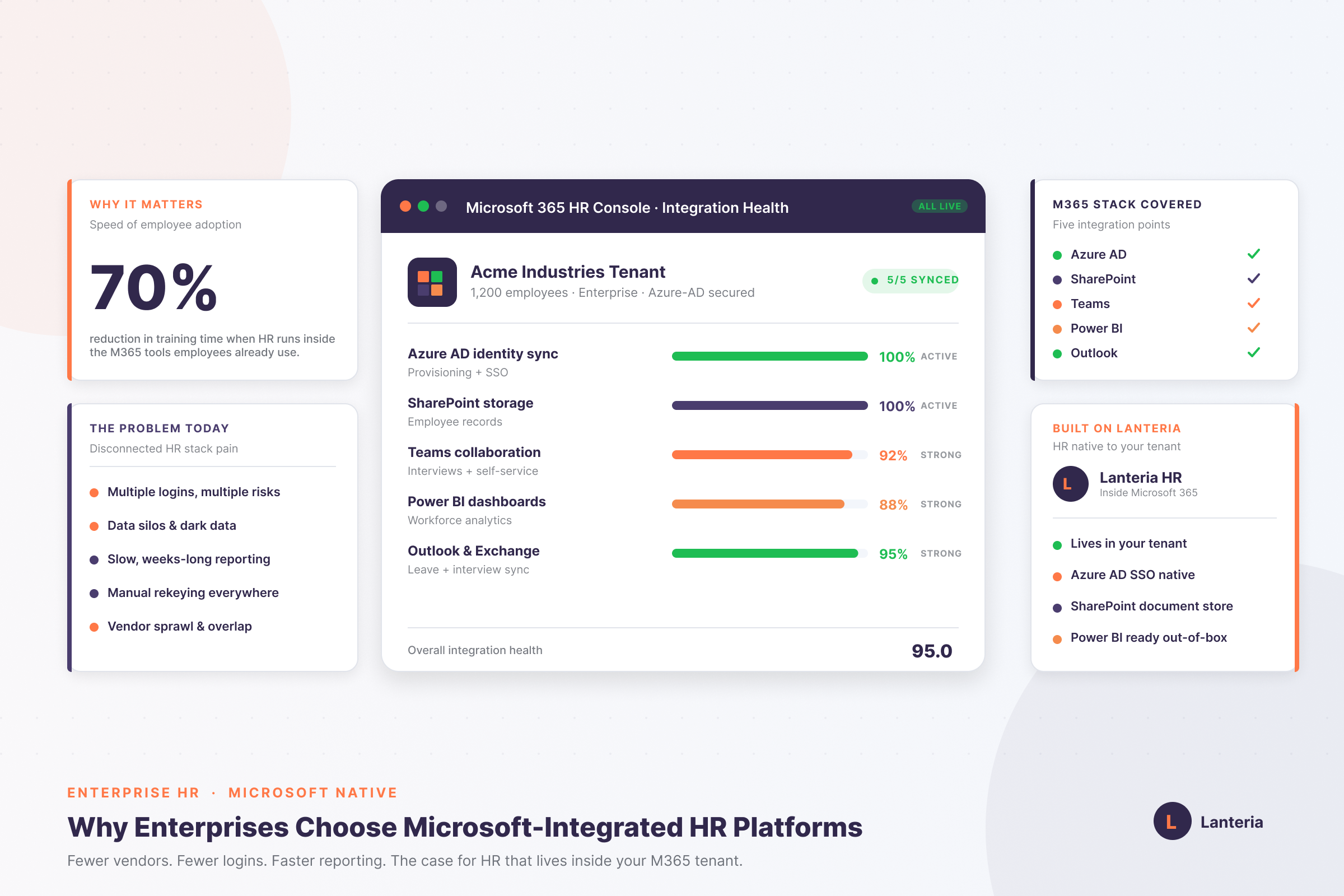
Microsoft-Integrated HR Platforms: Benefits & How It Works
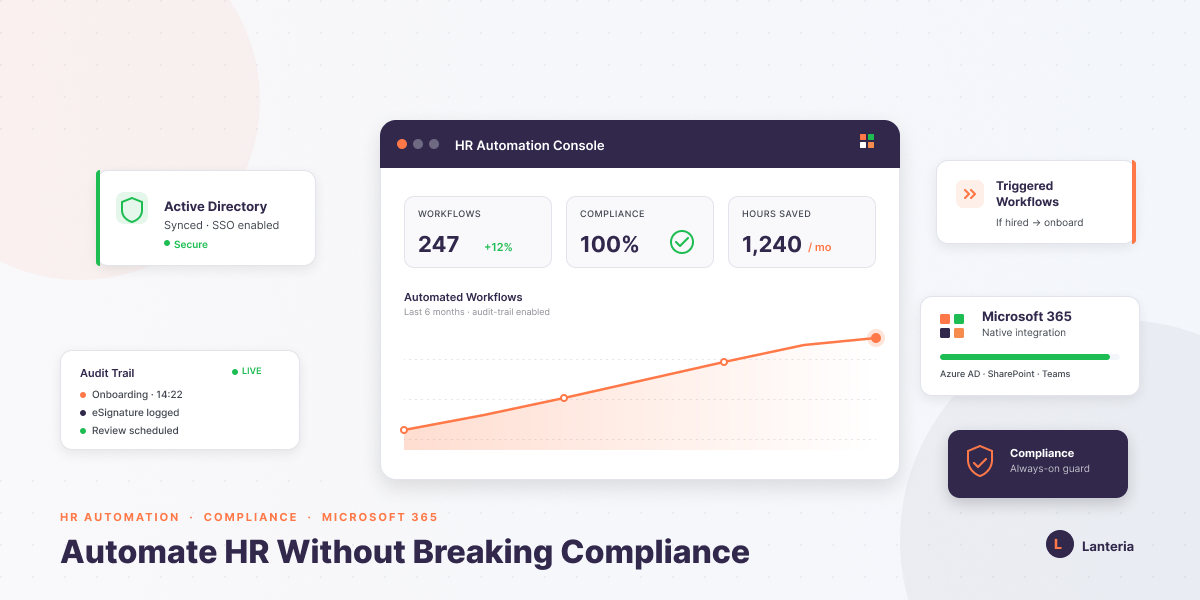
Microsoft-integrated HR platforms run inside your own tenant. See how SharePoint, Azure AD, Teams and Power BI cut risk, lift adoption and speed reporting.
Read more


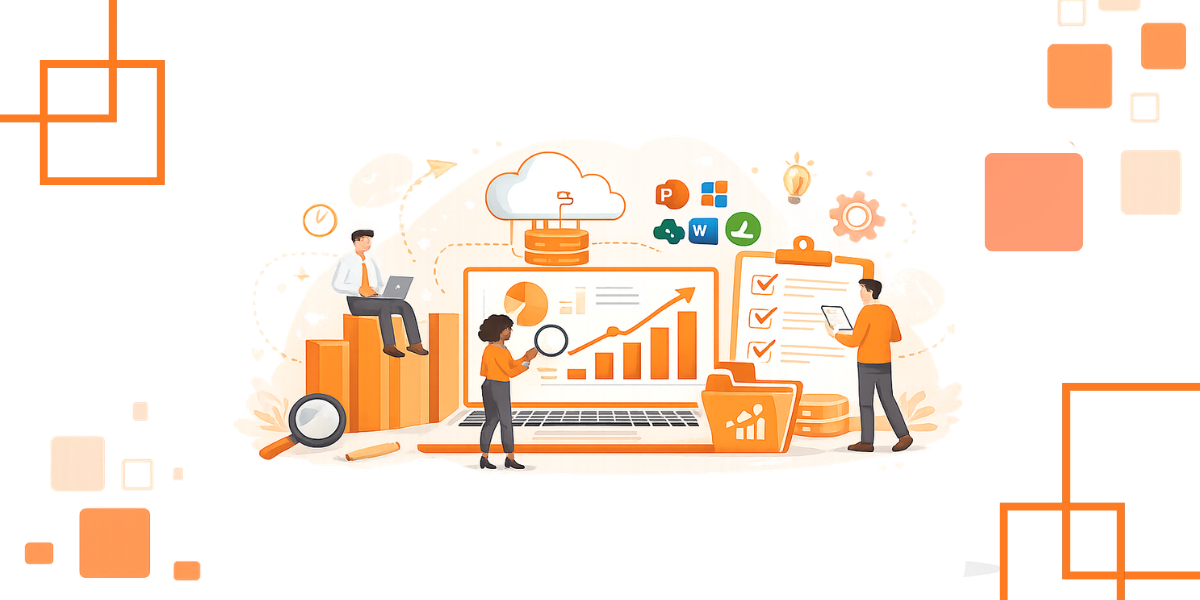
Suppose that your CEO requests the turnover of your high-performing department. You open various spreadsheets and observe various figures. The accuracy still remains questionable after hours of manual labor.
This situation is common. It has been referred to as the data swamp problem. It wastes time and poses a risk to the business. But you can get rid of it using a people analytics software.
This guide teaches one how to make that swamp a value. We also define people analytics and explain its importance. You will also learn how to automate it using Microsoft 365 and Lanteria.
People analytics refers to the use of data to resolve workforce issues. It is not just headcount keeping. It uses statistics and technology on HR information.
The information is derived through HRMS, payroll, and performance tools. Such data is then discussed to identify trends and patterns. Such insights enhance decision-making.
This is a mental shift for the HR leaders. Making decisions is no longer based on intuition. They treat employees as a strategic asset rather than a cost.
Helpful Resource: What are People Analytics?
Current organizations such as Lufthansa and Warner trust in facts. They do not make guesses about the workforce's needs. In the absence of analytics, decisions are made based on assumptions.
The lack of visibility may lead to excessive turnover among the best employees. Problems surface too late. Analytics can help avoid this.
Information brings about transparency amongst teams. It facilitates budgetary conversations with the leadership. Reporting time is also reduced from weeks to seconds with automation.
Not every data is for the same purpose. A powerful strategy must have many levels of analysis. The majority of HR teams undergo four phases.
Understanding analytics types helps organizations evolve from reactive reporting to proactive decision-making.
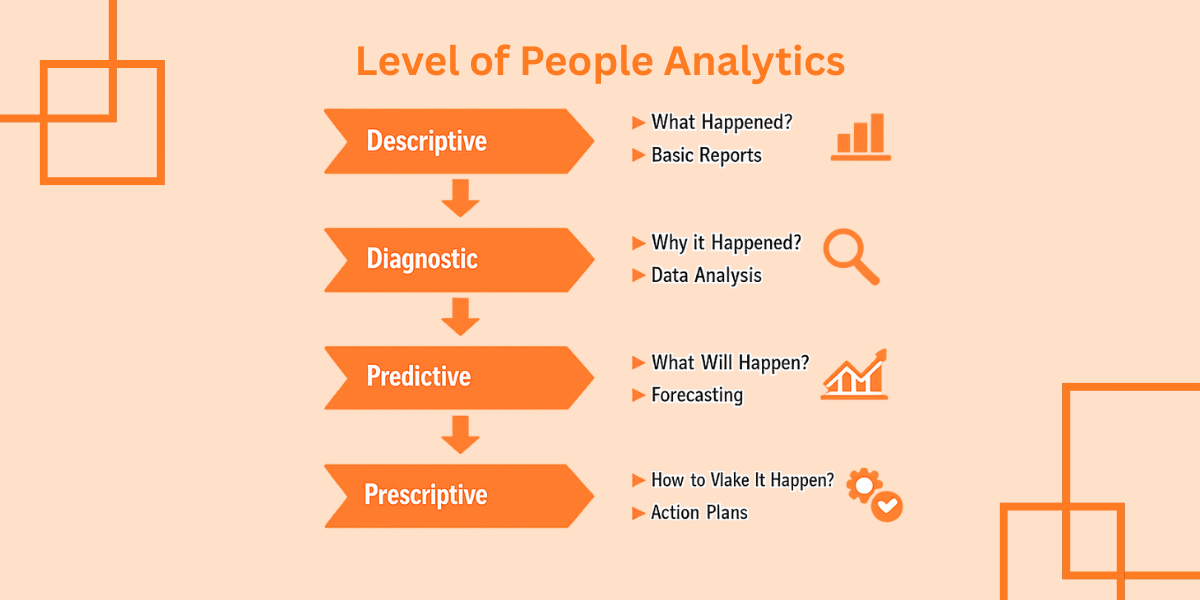
This is the starting point. It contains conventional HR reports. These are turnover, headcount, and salary averages.
The focus is on past data. You are the witness of what has already occurred. It is as though you are unmistakably looking at the rearview mirror.
This layer explains why things trend. As an illustration, the post-leadership turnover. It seeks interrelations in data.
This involves connected and clean systems. All data should be contained under a single location. In the absence of this, analysis becomes invalid.
Predictive analytics is forward-looking. It involves using previous data to predict results. This involves the forecasting of resignations.
Flight risks can be identified in advance. HR can intervene in the pre-employee turnover process. Planning is forward-looking rather than backward.
This phase proposes recommendations. The system does not simply bring issues to light. It suggests solutions.
In some cases, as with skills gaps, learning suggestions are elicited. LinkedIn Learning courses can be recommended. Issues are resolved when they are not expanded.
A culture of data-demand organisation. Without planning, one can only fail in AI. A gradual implementation process is best.
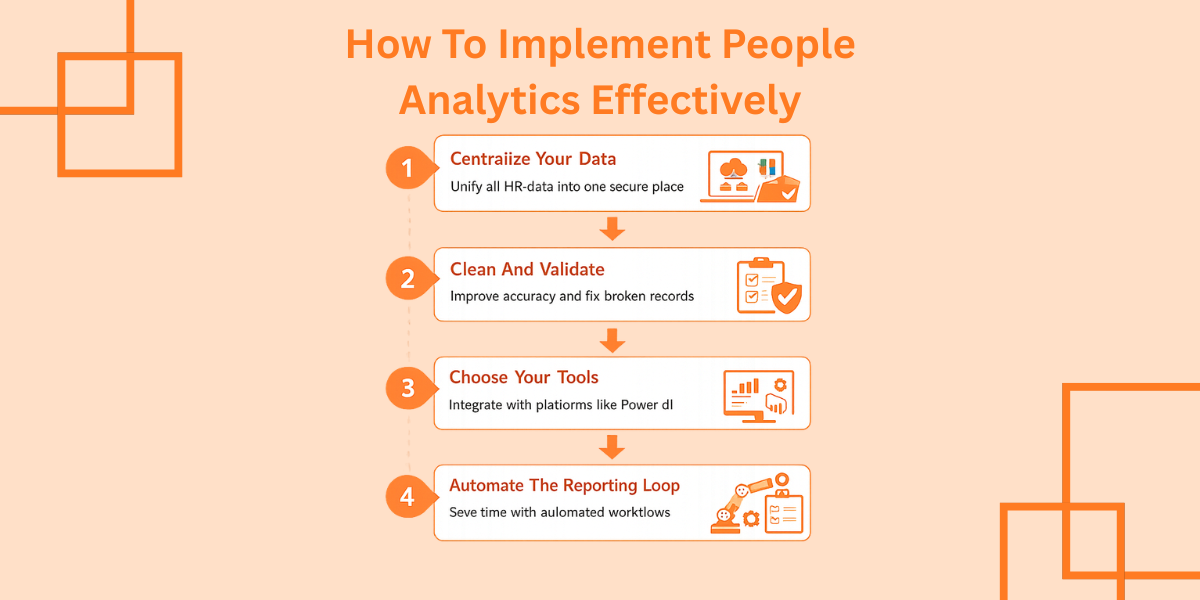
You are not able to analyse scattered information. Move away from spreadsheets. Use one secure HRMS.
Microsoft 365 is trusted by many organisations. Azure Active Directory offers identity control. Centralisation brings about visibility.
Step 2: Clean And Validate
Data quality matters. The broken profiles cause errors. Validation must come first
Such tools as eSignatures contribute to the standardisation of records. Paperwork remains in its right place. Accuracy in planning can be enhanced by up to 90 percent with clean data.
Analytics is made possible through integrations. HR software should have integration with other applications. Power BI is a strong choice.
Lanteria interiors with Power BI. Dashboards are updated in real time. All are dealing with a single and reliable source.
Paper reports drag back teams. Robotization eliminates monotonous activities. Routine processes are handled through workflows.
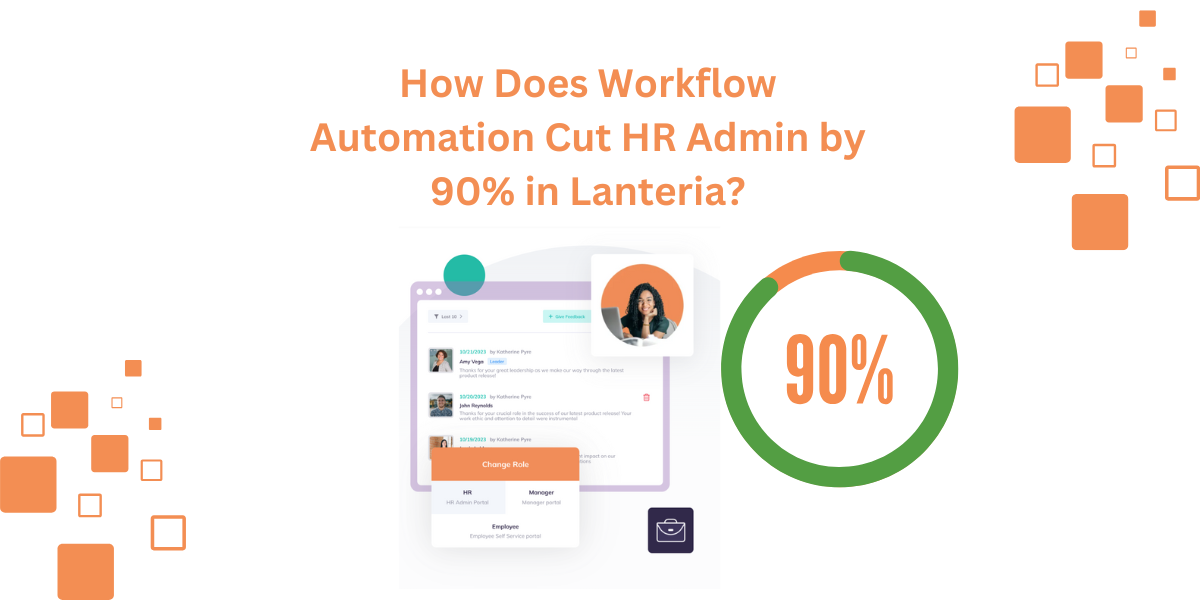
Onboarding and offboarding go automated. Manual involvement drops by 75%. HR teams are oriented to the insights rather than data entry.
Helpful Resource: Future-Proof Your HR with Secure Lanteria Solutions
It is difficult to keep track of everything. Pay attention to measures related to business impact. These KPIs bring actual value.
The best time was earlier. The next best time is now. Cracks in weaker systems become apparent as they grow.
Remote working and scaling make it more complicated. Manual tools stop working. Any systems have to expand as a business.
Late migration causes future migration issues. Early adoption is easier. It is also creating a long-term benefit.
People analytics is no longer a choice. Every HR leader needs it. Transparency and precision are the elements of superior decisions.
Error is minimised through centralised records. Analytics makes HR a strategic operation. The cost centre label is no longer there.
Data is accessible using Microsoft-native tools. Understandings are made available within a single click. Go small and use data to drive your people strategy.
Yes, particularly when it is combined with Microsoft 365. SharePoint and Azure security are employed in platforms such as Lanteria. Information about employees is not lost.
Yes, Power BI is good for HR analytics. Dashboards are updated in real time. Information remains interactive and pictorial.
The majority of teams save more than 100 hours a month. Automation is involved with workflows and reports. HR focuses on high-value work.
Begin optimisation of your workforce using an HRMS that links data and choices.
Demo Now - Find out how businesses spend time saving 100 or more hours per month.