Custom Styles

HR Analytics vs People Analytics: Key Differences in 2026

HR Analytics vs People Analytics: Key Differences in 2026
Table of Contents

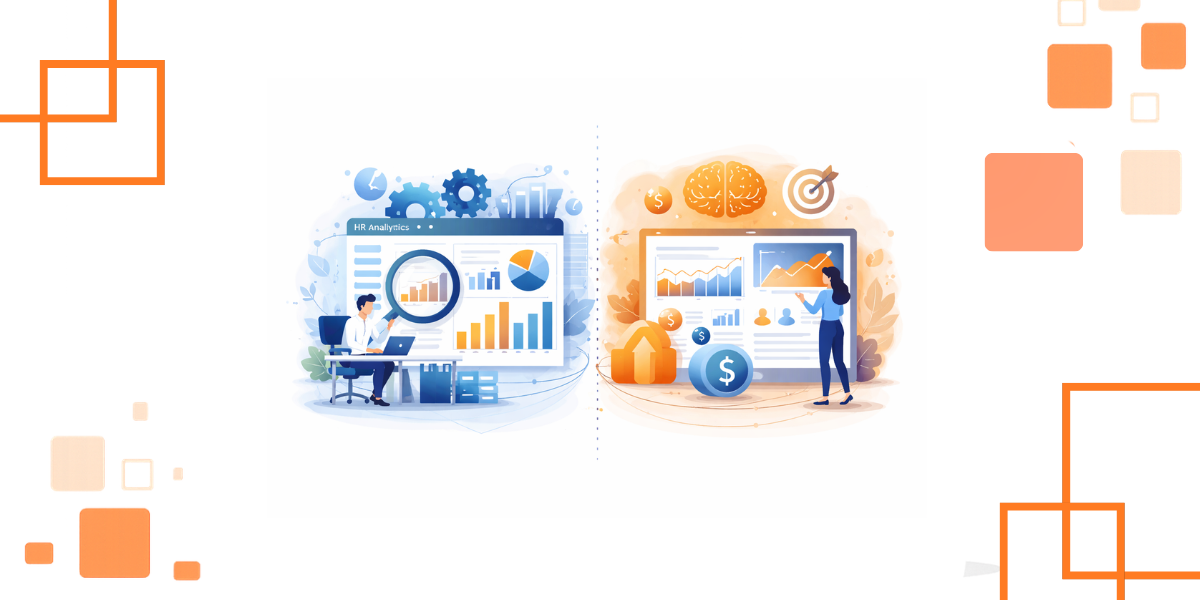
Direct Answer: HR analytics measures the efficiency of HR operations — time-to-hire, payroll accuracy, and compliance — using historical data from internal HR systems like the HRIS and ATS. People analytics is broader: it links employee behavior to business outcomes such as revenue per employee and attrition risk, combining HR, finance, and sales data to predict what happens next. The core difference is scope and direction — HR analytics looks backward at how HR performs, while people analytics looks forward at how the workforce drives growth. In 2026, the practical move is to centralize both on one platform like the Lanteria Analytics Suite connected to Microsoft 365, then layer Power BI reporting for predictive insight.

Suppose you are a CHRO of a fast-growing technology company. The time to hire is good, but you see that your best developers are moving. Why the disconnect?

This is the traditional wall in which traditional HR reporting fails. At the point where simple measures end, strategic intelligence begins. This is why this subject is important in 2026.

This guide will help you to demystified hr analytics vs people analytics. We are going to take a look at their data architectures and what each of them is designed to address. You will also discover how to select tools that will ensure your strategy is future-proof.
What Is HR Analytics?

What Is HR Analytics?

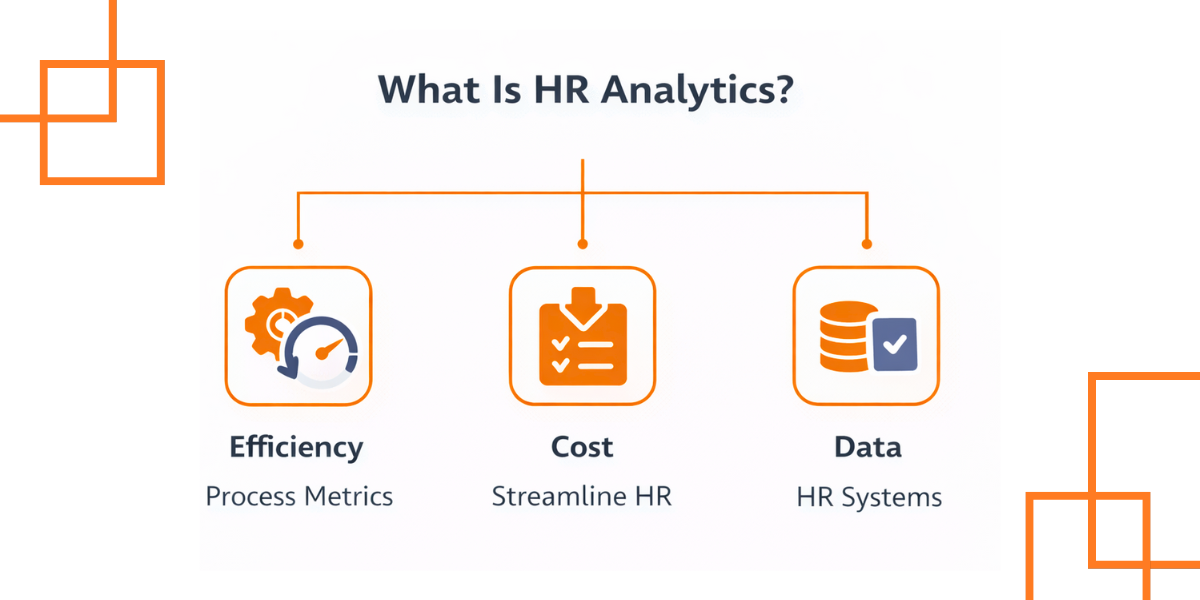
HR Analytics is the process of gathering and analyzing information relating to HR roles. It is concerned with the performance of HR departments. Consider it as an internal health audit of HR activity.

It will be technically based on your Human Resource Information System (HRIS). It monitors lagging indicators, i.e., it measures what has already occurred. These are payroll accuracy, time-to-fill, and compliance rates.

The Scope of HR Analytics

  • What it measures: Operational efficiency and process-based measures.
  • Why use it: To minimize the administrative expenses and streamline the HR processes.
  • Data Sources: Payroll system, Applicant Tracking Systems (ATS), and attendance records.

What Is People Analytics?

People Analytics is more comprehensive and holistic. It does not simply examine HR processes. It links workforce behavior with business results.

By 2026, individual analytics is a leading-indicator powerhouse. It combines HR information with finance, sales, and external market indications. It tends to apply machine learning to forecast the next action.

The Scope of People Analytics

  • What it measures: Employee experience, behavioral patterns, and business outcomes.
  • Why use it: To achieve revenue per employee and forecast talent risks such as burnout.
  • Data Sources: CRM data ( Salesforce ), collaboration tools ( Microsoft Teams ), and sentiment surveys.

Helpful Resource: What are People Analytics?

Key Differences: A Technical Breakdown

Both of these fields work with data, yet they are constructed on different grounds. They differ in their objectives, sources of data, and stakeholders. This is why they get confused by the teams and even fail to understand.

A comparison that will enable you to distinguish between HR analytics and people analytics is provided below. Apply it in order to match expectations and what each approach can do. It also assists you in the selection of tooling that will suit your level of maturity.

Feature HR Analytics People Analytics
Primary Focus HR department efficiency. Total business impact.
Data Perspective Past-oriented and historical. Future-oriented, predictive, or prescriptive.
Data Sources Internal HR systems, such as HRIS and ATS. Cross-functional teams, including HR, Finance, and Sales.
Key Stakeholders HR managers and recruiters. The CEO, CFO, and department heads.
Typical Tooling Excel, basic HRIS dashboards. Power BI, Python, AI-narrative engines.
Goal Improve HR service delivery. Optimize human capital ROI.

Helpful Resource: Real-Time HR Reporting with Lanteria & Power BI
The Evolution of Analytics Categories

The Evolution of Analytics Categories

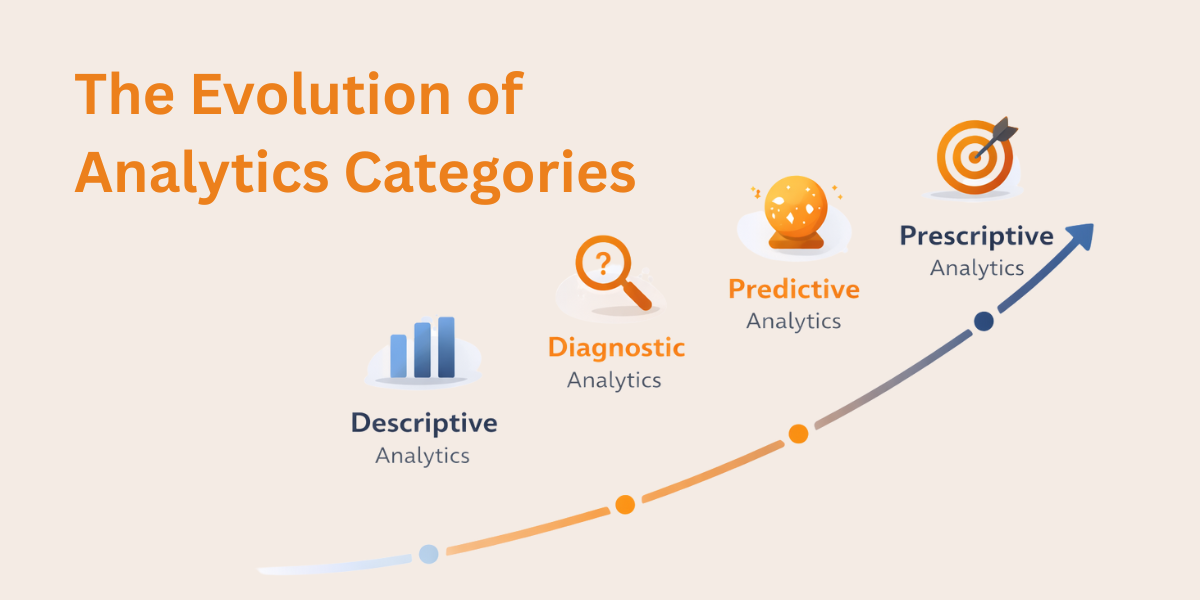
To be a master of workforce data, you must be familiar with the four types of analytics. The majority of the HR departments begin at the bottom and ascend the curve. Data quality and tooling are typically the separators between levels.

  • Descriptive Analytics: The What. It reports the trends in history, e.g. Our turnover rate was 12% last year.
  • Diagnostic Analytics: The Why. It traces causes of problems, such as Turnover is high in the engineering department due to poor career paths.
  • Predictive Analytics: The What is Next. It makes predictions, such as Employee X is likely to leave after six months, 80%.
  • Prescriptive Analytics: The How to Fix It. It suggests the measures, such as "Make more mentoring to raise retention by 15%.

How to Implement a Modern Analytics Strategy

There is no need to have a complete data science team to start. Trends are towards integrated ecosystems in 2026. You require tools that communicate.

  • Centralize Your Data: Have a platform such as Lanteria that is directly connected to Microsoft 365. This prevents data in fragmented spreadsheets. It is also better at governing and access control.
  • Leverage Power BI: Leverage Power BI. This allows you to view the workforce trends alongside business KPIs. It also enables leaders to have real-time reporting.
  • Focus on Narrative Insights: Go beyond charts. Apply AI-driven tools, which describe why and what is changing. That simplifies things when it comes to insights.

Helpful Resource: Transform HR with Lanteria Analytics Suite

TL;DR

HR Analytics streamlines HR activities, such as speed in hiring and payroll. People Analytics aligns the behavior of employees with business success, such as productivity and ROI. Integration is important as the tools have to be compatible with Teams and SharePoint.

Predictive thinking is actually the competitive advantage in 2026. When the description of what has happened shifts to what will happen, then you plan differently. Those changes make reporting a strategy.

Conclusion

The boundary between HR and the rest of the business is disappearing. HR Analytics provides you with clean and arranged operational data. That data is transformed into strategic intelligence by People Analytics.

HR ceases being a cost center when you go beyond reporting. It is a growth driver for the entire organization. This is what modern workforce analytics are all about.

Begin with clean inputs and a single clear business question. First, develop trust with simple, repeatable dashboards. Then do predictions when your processes and data are stable.

FAQs

Is People Analytics Only for Large Enterprises?

No. Cloud HRMS systems can now provide mid-sized companies with out-of-the-box analytics. It does not require a huge budget to begin.

What Is the Most Important Metric to Track in 2026?

The increases in Revenue per Employee and Skills Gap Index are growing rapidly. They tend to be more than simple turnover rates in the present day.

Do I Need to Be a Data Scientist to Use People Analytics?

Not anymore. Applications such as Lanteria can provide plain English dashboards and AI summaries. You do not need to write code to act on insights.

Request a demo with Lanteria and begin to make people decisions faster and cleaner in Microsoft 365.

OUR RATINGS

We are trusted
by our clients

We are trusted by our partners

Microsoft Gold PartnerProduct Hunt CapterraSoftware Adviceg2
Book a Demo
Get more HR trends, news, tips and guides to streamline your operations. We promise we don’t spam.
We care about the protection of your data. Read our Privacy policy.

REVIEWS

Here’s what our customers say

Ekaterina Avatar
Ekaterina K.

"Top-notch HR solution with excellent support team"

I was able to tailor the system to fit the unique needs of my organization, from creating custom fields to setting up workflows and approvals. This level of flexibility made it so easy to integrate into our existing HR processes, and it's made a real difference in our daily operations.
Read more reviews
Aleksandra Avatar
Aleksandra K.
"Lanteria is a top SharePoint HR software with a great team behind it"
    Lanteria HR is a great product that has even better team behind it. And as for a SharePoint-based product the Lanteria HR system looks very modern and runs quickly.
Akshay Avatar
Akshay U.
"Lanteria is the most flexible and secure HRMS I had"
    Our team is on Office 365, and Lanteria solves a big problem for us because it works so well with Microsoft products.
Hanna Avatar
Hanna B.
"Al-star for employee performance management and reviews"
   The Performance module gives us a straightforward dashboard where we can see all the vital stats about our employees' work performance. And, it updates in a flash so we're always in the know.

Similar Posts